


Sins Of The Fathers
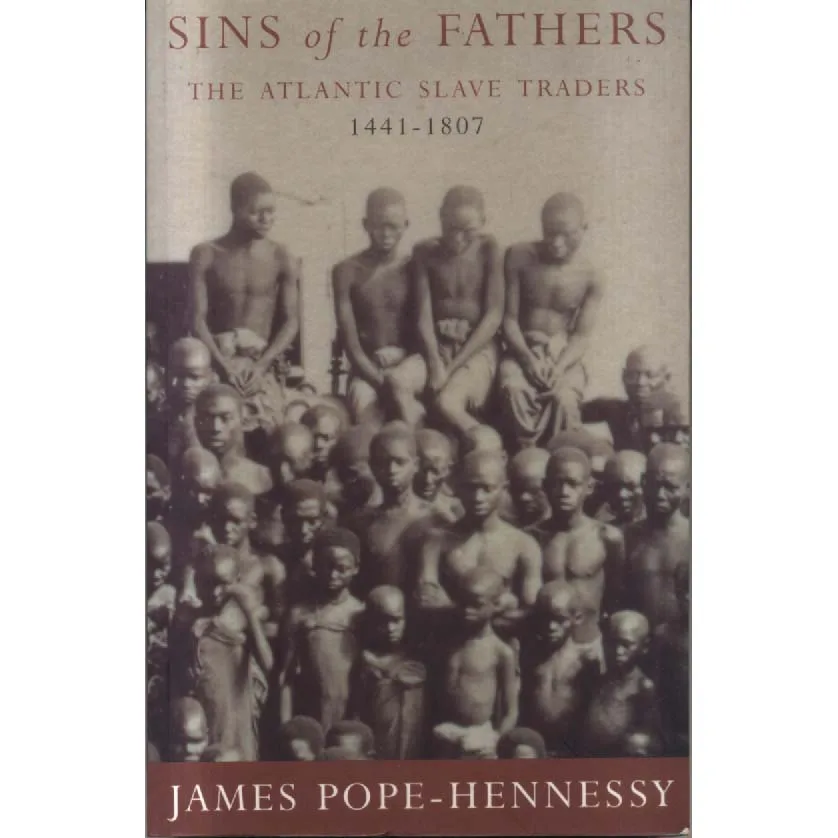
Publisher: Phoenix Press
Format: Paperback
ISBN: 9781842121788
Publisher: Phoenix Press
ISBN: 9781842121788
Condition: Good
Sold by: Crappy Old Books
Three and a Half Centuries of Greed, Respectability and the Extraordinary Human Talent for Justifying the Unjustifiable
Human civilisation has produced some remarkable achievements. We have developed philosophy, established legal systems, constructed magnificent cathedrals and spent centuries congratulating ourselves upon our moral superiority to practically everyone who came before us.
Unfortunately, a closer examination of history reveals that many of the same people responsible for these achievements were also perfectly comfortable with kidnapping human beings, transporting them across oceans and selling them as property.
Apparently, the principles of Christian charity, human dignity and enlightened civilisation came with certain rather substantial exceptions.
In Sins of the Fathers: The Atlantic Slave Traders, 1441–1807, distinguished historian and biographer James Pope-Hennessy examines one of the darkest chapters in European and Atlantic history: the development, expansion and eventual challenge to the transatlantic slave trade.
Originally published in 1967 and reissued by Phoenix Press in 2000, this meticulously researched account draws upon the journals, correspondence and personal testimony of slave traders, sailors and enslaved Africans to reconstruct the workings of an institution whose brutality was matched only by its extraordinary profitability.
It is an uncomfortable, illuminating and essential work of history, exposing the disturbing ease with which ordinary commercial ambition can coexist with almost unimaginable cruelty.
The Age of Discovery, or How to Make Exploration Considerably Less Admirable
The story begins in the fifteenth century, when European maritime exploration was opening new trading routes along the African coast.
To the enthusiastic chroniclers of European expansion, this was an age of daring navigators, ambitious merchants and courageous adventurers setting forth into unfamiliar waters.
Unfortunately, adventure had an increasingly unpleasant commercial dimension.
As Portuguese and other European traders established connections along the African coast, the trafficking of enslaved people became part of expanding maritime commerce.
What followed was the development of a vast Atlantic trading system linking Europe, Africa and the Americas.
Ships carried manufactured goods, commercial commodities and human beings, while merchants calculated profits, investors considered returns and governments recognised the economic advantages of overseas expansion.
The disturbing feature of this arrangement was not merely its cruelty, but the extent to which cruelty became incorporated into ordinary business practice.
Human beings could be entered into accounts, assessed for their monetary value and treated as cargo.
It was capitalism operating without the inconvenience of recognising that some things should never be for sale.
Respectable Gentlemen, Profitable Investments and Other Unpleasant Contradictions
One of the most revealing aspects of Pope-Hennessy’s history is its attention to the people who participated in the trade.
The Atlantic slave trade was not conducted exclusively by recognisable villains operating outside respectable society.
It involved merchants, shipowners, investors, officials and commercial organisations whose activities were often regarded as legitimate enterprises.
Men who considered themselves honourable could participate in arrangements founded upon coercion, suffering and the systematic denial of human freedom.
This presents an uncomfortable historical lesson.
People do not necessarily need to regard themselves as wicked in order to participate in wicked institutions.
Frequently, all that is required is a sufficiently profitable commercial opportunity, an established social convention and a collection of convenient explanations for why the victims do not deserve the same consideration as everyone else.
Pope-Hennessy examines the world of these traders through their own records, revealing the practical calculations and moral contradictions underpinning the Atlantic economy.
The resulting picture is particularly disturbing because so much of the administration was thoroughly ordinary.
Accounts were maintained. Voyages were organised. Risks were calculated. Profits were distributed.
The paperwork, one suspects, was often immaculate.
The Human Cost Behind the Commercial Statistics
Behind the ships, trading arrangements and financial calculations lay the experiences of millions of Africans subjected to enslavement and forced transportation.
Pope-Hennessy draws upon contemporary testimony to illuminate the violence, fear, exploitation and suffering that formed the foundation of the trade.
The Atlantic crossing was only one stage of a much larger process involving capture, separation, confinement, transportation and sale.
Families were destroyed, communities disrupted and individuals reduced to commodities within an international commercial system.
The historical evidence is especially powerful when it allows the experiences of enslaved people to emerge alongside the accounts of those who profited from their captivity.
The contrast exposes the enormous gulf between the abstract language of commerce and the human reality it concealed.
A merchant might record a financial loss.
For the people involved, the consequences could be the destruction of everything familiar and the permanent loss of personal freedom.
This is history in which economic success and moral catastrophe were frequently two descriptions of the same event.
Abolition: Discovering That an Entirely Legal Business Was Morally Indefensible
By the eighteenth century, organised opposition to the slave trade was gathering strength in Britain and elsewhere.
Religious campaigners, abolitionists, formerly enslaved people and political reformers challenged practices that had long been defended through economic arguments, racial prejudice and appeals to established custom.
The campaign against the trade revealed how deeply economic interests could become embedded within political institutions.
Abolition threatened investments, commercial relationships and powerful vested interests.
Its opponents consequently demonstrated the remarkable human ability to present personal financial advantage as a matter of national necessity.
Nevertheless, opposition grew.
In 1807, Parliament passed legislation abolishing British participation in the slave trade, a major turning point that did not itself abolish slavery throughout the British Empire or end the wider Atlantic trade.
Pope-Hennessy’s historical account ends at this critical moment, tracing the development of a system whose consequences continued long after the legislation.
The distinction matters.
Ending legal participation in a trade was not the same as repairing the suffering it had caused, nor did it immediately remove the institutions that depended upon enslaved labour.
History, regrettably, rarely provides such convenient conclusions.
A Historian Who Lets the Evidence Do the Accusing
James Pope-Hennessy was an accomplished British historian and biographer whose careful use of documentary sources gives this book much of its authority.
Rather than relying solely upon broad moral pronouncements, he reconstructs the Atlantic slave trade through the words and experiences of people involved in it.
The result is a history that exposes the mechanisms of exploitation while allowing readers to understand the commercial, political and social circumstances in which the institution operated.
First published during the 1960s, the book also belongs to an earlier generation of historical scholarship. Subsequent research has greatly expanded our knowledge of African societies, resistance, slavery and the wider Atlantic world.
Nevertheless, Pope-Hennessy’s use of contemporary evidence makes the work valuable both as a history of the slave trade and as an example of historical writing from its period.
It demonstrates that the most disturbing historical revelations are not always concealed in spectacular discoveries.
Sometimes they are sitting quietly in a merchant’s account book.
About This Copy
This is the 2000 Phoenix Press paperback edition of Sins of the Fathers: The Atlantic Slave Traders, 1441–1807 by James Pope-Hennessy, ISBN 9781842121788.
Condition: Good. A previously owned paperback showing normal signs of age and handling consistent with its condition grading. A respectable second-hand copy of a serious and thought-provoking historical study.
Available from Crappy Old Books, where we believe that uncomfortable history deserves to be read, particularly when it challenges the comforting stories societies prefer to tell about themselves.
A compelling account of the Atlantic slave trade, its participants, its victims and the political and moral contradictions that sustained it for centuries.
Recommended for readers interested in maritime history, British imperial history, the Atlantic world, abolition and the relationship between commerce and human exploitation.
It is a reminder that civilisation cannot be measured merely by the sophistication of its institutions, the wealth of its merchants or the magnificence of its buildings.
After all, some of history’s most respectable gentlemen were engaged in activities that history now recognises as profoundly indefensible.
And they probably considered themselves excellent businessmen.
Keep browsing: See more History books Other books by James Pope-Hennessy
